How Much Does Antifouling Removal Cost? What Determines the Price
The cost of removing old antifouling depends on the area below the waterline, the condition of the existing coatings, the required level of removal and the boat’s location. For an initial estimate, a contractor will usually need the yacht’s model and length, its marina or boatyard location, and photographs of the hull. The final scope is confirmed after assessing the surface.
When comparing quotes, check what the price includes: coating removal alone, or also work-area preparation, waste collection, priming and new antifouling. Haul-out and storage ashore may be charged separately.
Our prices
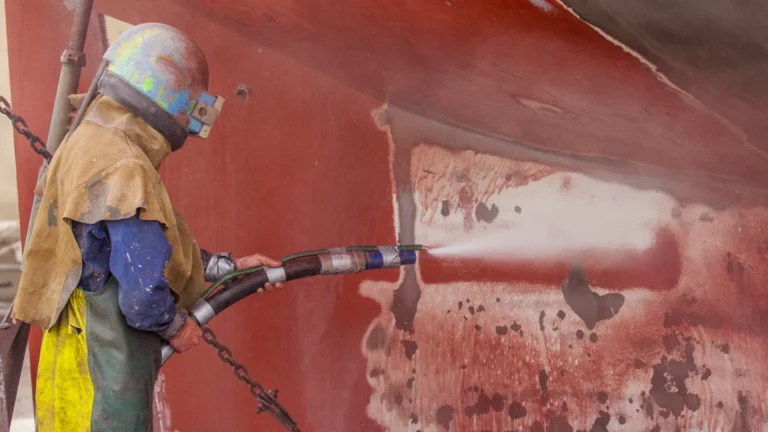
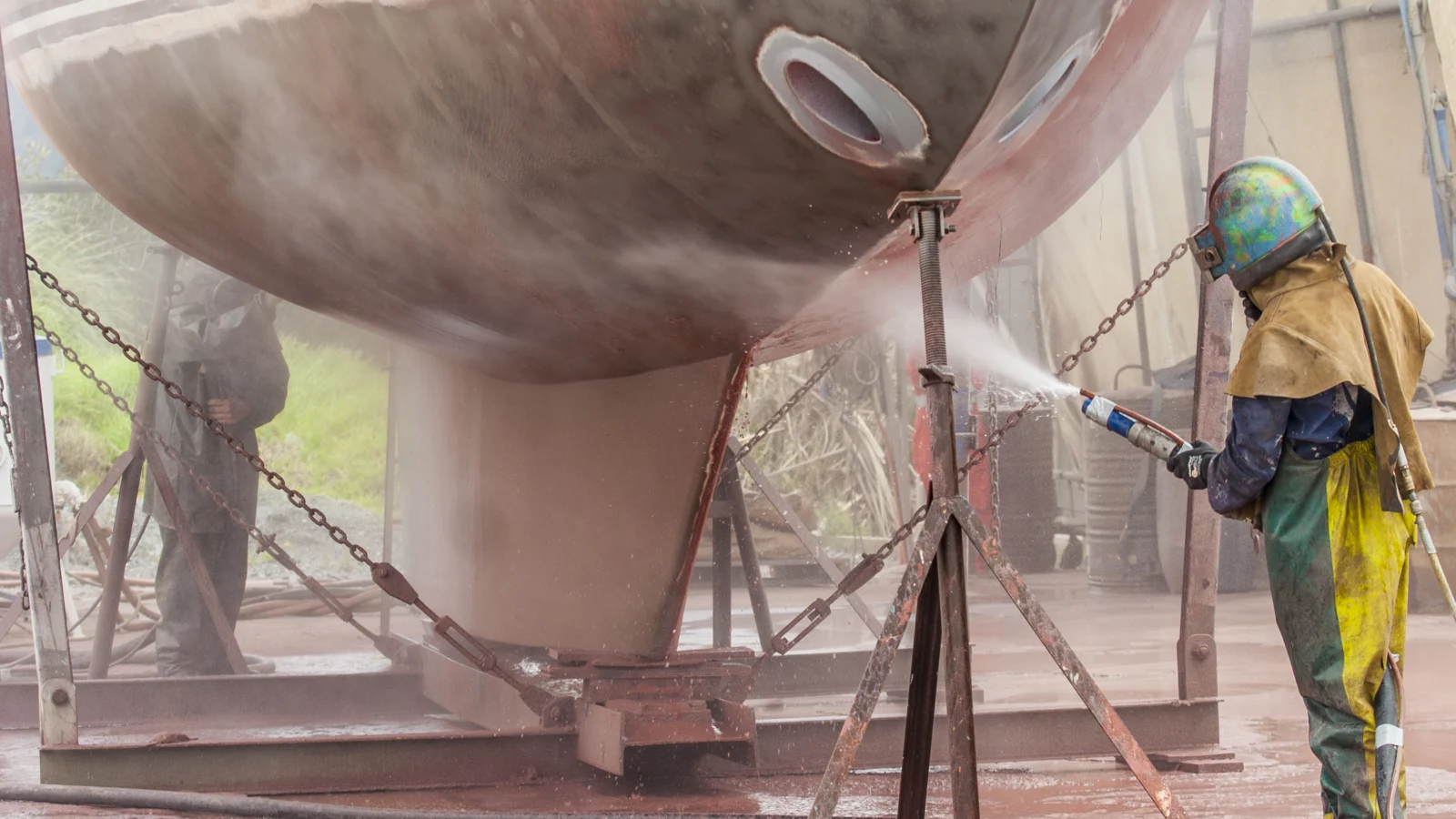
Antifouling removal by low-pressure wet blasting
From €17 per foot
Primer and new antifouling: from €7.50 per foot, materials extra
Per foot of overall length, excl. VAT. The final price is confirmed after assessing the hull.
What Work Are You Paying For?
Removing barnacles and marine growth, stripping loose paint and completely removing accumulated coatings are different jobs.
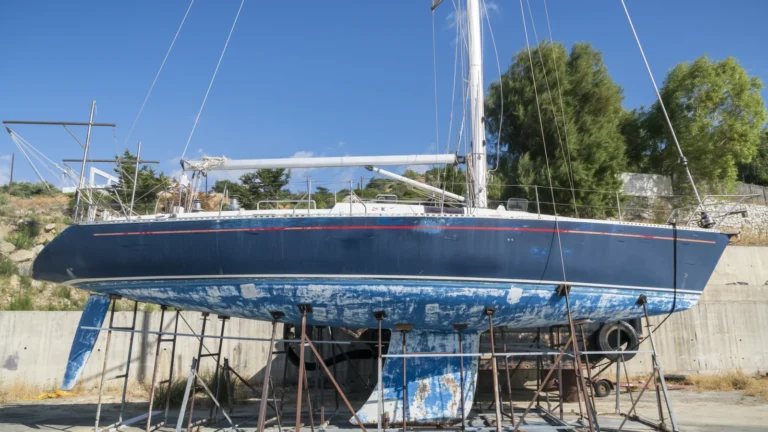
A hull may look clean after pressure washing while still carrying years of old antifouling. If those coatings are cracking, flaking or poorly bonded, further preparation will be needed before repainting.
Before pricing the work, the contractor needs to establish which layers should be removed and what surface is required for the next stage. Stripping every coating back to the gelcoat is not always necessary. Existing primers and protective barrier coats should be assessed separately.
What Determines the Cost of Antifouling Removal?
1. Hull Size and Underwater Shape
A yacht’s length helps estimate the scale of the job, but it does not show the exact surface area to be treated.
Boats of the same length can have different beams, draughts and hull shapes. A catamaran, motorboat and sailing yacht therefore require different calculations. The keel, rudder and areas around hull fittings also affect the workload.
Include the boat’s make and model when requesting a quote. This provides more useful information than length alone.
2. Thickness and Condition of Existing Coatings
A few thin coats and a heavy accumulation of paint require different amounts of work.
Relevant factors include:
- the number and type of existing coatings;
- how firmly they adhere to the surface;
- cracking and flaking;
- areas of previous repair;
- whether particular layers need to be preserved.
Coatings may also respond differently across the same hull. Photographs help with the initial assessment, but they do not always reveal the thickness or composition of every layer.
3. Hull Material and Required Level of Removal
The removal method must suit the hull material. On fibreglass boats, the aim is to remove unwanted coatings while protecting the gelcoat and underlying laminate.
Wet abrasive blasting combines water and abrasive media to remove coatings and prepare surfaces. Working on fibreglass requires suitable media, appropriate equipment settings and controlled application.
A test patch helps establish how the coating responds and allows the contractor to refine the approach before treating the rest of the hull.
4. Access and Boatyard Conditions
To remove antifouling from the entire underwater hull, the yacht must be ashore and properly supported on a cradle or stands.
Before work begins, confirm:
- whether the marina or boatyard permits the proposed removal method;
- whether there is access for the equipment;
- whether there is enough working space around the boat;
- how nearby boats and the work area will be protected;
- how blasting residue will be contained and collected;
- whether areas behind support pads can be accessed.
If supports need to be repositioned, this must be arranged with the responsible yard staff. These practical details affect both scheduling and cost.
5. The Boat’s Location
A mobile service involves transporting equipment and setting up at the boat’s location. Travel costs may therefore form part of the quote.
For a more distant marina, discuss possible dates in advance. If several boats at the same location require treatment, ask about a coordinated visit and a quote for the group.
6. Work Required After Removal
Antifouling removal is one stage of underwater hull maintenance.
Once the old coating has been removed, the hull may need inspection, further surface preparation, local repairs, primer and new antifouling. The necessary steps depend on the hull’s condition and the selected coating system.
Any hidden defects revealed during stripping should be assessed and quoted separately. Removing antifouling is not, by itself, an osmosis treatment or a fibreglass repair.
What Should the Quote Include?
To compare contractors fairly, request quotes for the same scope of work.
| Item | What to Confirm |
|---|---|
| Areas to be treated | Entire underwater hull, keel, rudder or selected sections |
| Level of removal | Which coatings will be removed and which should remain |
| Work-area preparation | Protection of the ground, surrounding area and nearby boats |
| Clean-up | Who collects and removes the treatment residue |
| Travel | Whether transport and travel costs are included |
| Haul-out and storage | Whether these are included or paid directly to the yard |
| New coatings | Whether preparation, primer, antifouling and materials are included |
| VAT | Whether the quoted price includes VAT |
| Additional work | How newly discovered defects and changes to the scope are approved |
A low starting price may cover only one stage. For budgeting, it is more useful to understand the cost of the agreed result and any potential additional charges.
How Long Does Antifouling Removal Take?
The time required depends on hull area, coating condition, the chosen method and site arrangements.
The stripping time and the boat’s total stay ashore are different. Inspection, repairs, surface preparation and coating application may all follow removal.
Overcoating intervals and launch times depend on the coating manufacturer’s instructions and application conditions. The completion date should therefore account for the full maintenance process.
What Photographs Are Needed for a Quote?
For an initial assessment, provide:
- an overall view of the boat ashore;
- photographs of the underwater hull from both sides;
- close-ups of cracking, flaking or damage;
- photographs of the keel, rudder and areas around the supports.
Also include the boat’s model, length, hull material, location and preferred dates. If you know which primers and antifouling products were used previously, share that information.
If the yacht is still afloat, an initial discussion can begin with a description and older photographs. The coating assessment will need to be confirmed after haul-out.
Frequently Asked Questions
Can You Give an Exact Price Based on Boat Length Alone?
Length can provide a starting point for an estimate. A more accurate quote requires information about hull shape, existing coatings, the required level of removal and site conditions.
Does Antifouling Need to Be Completely Removed Every Time?
No. Full removal depends on the condition and compatibility of the existing coatings. If the underlying system is sound, preparation in accordance with the chosen coating manufacturer’s instructions may be sufficient.
Is New Antifouling Included in the Removal Price?
This should be stated in the quote. Stripping, priming and applying new antifouling may be priced separately.
Can the Work Be Carried Out at My Marina?
This depends on the marina’s rules, suitable space ashore and equipment access. Permission and practical arrangements must be confirmed in advance.
Can I Get an Estimate Remotely?
Yes. Start by sending the boat’s model, dimensions, location and photographs. The final scope is confirmed after assessing the hull’s condition.
Request an Antifouling Removal Quote
Hydro Blast & Marine Service provides mobile antifouling removal using low-pressure wet blasting. Based in Burgas, the team arranges visits along the Bulgarian coast, to Northern Greece and to Romania by prior agreement.
For an initial estimate, send your yacht’s model and length, marina location, a few photographs of the hull and your preferred dates. Let us know whether you need coating removal only or also primer and new antifouling.