When Should You Remove Antifouling Completely, and When Is Preparation and Recoating Enough?
Old antifouling does not need to be stripped completely every time a yacht is serviced. If the existing coating is firmly bonded, suitable for overcoating and compatible with the new product, preparation in accordance with the manufacturer’s instructions is usually sufficient. Widespread peeling, failure of accumulated layers or repairs to the underlying surface may require complete antifouling removal.
The decision should follow an inspection of the hull ashore. It is important to establish which layers are affected: the antifouling alone, the primer beneath it or the substrate itself. This determines the required level of removal, subsequent work and maintenance budget.
When can existing antifouling be retained?
Recoating without complete removal may be appropriate when:
- the existing coating adheres well to the surface beneath it;
- there is no widespread flaking, peeling or network of cracks;
- there are no signs of damage to underlying layers that require repair;
- compatibility between the existing and new coatings has been confirmed;
- the surface can be prepared in accordance with the chosen product’s technical documentation.
Preparation involves more than applying fresh paint after haul-out. Marine growth, salts and contamination must first be removed, the coating assessed and loose material taken off. Further steps depend on the product: wet abrasion, spot priming or an approved tie coat may be required.
For example, the Hempel’s Classic product data sheet specifies different preparation procedures depending on the type of existing antifouling. The same procedure therefore cannot automatically be applied to every yacht and coating. [1]
When are local repairs enough?
A small damaged area does not necessarily mean the entire hull needs stripping. If the defect is confined to one area and the surrounding coating and substrate are sound, local preparation may be sufficient.
This involves removing poorly bonded material, establishing the extent of the damage and rebuilding the necessary layers using the selected coating system. The cause should be identified first: accidental mechanical damage and recurring coating failure call for different approaches.
For example, a single scuffed area where a support pad has contacted the hull is different from multiple areas of peeling on both sides of the boat. A local repair may be appropriate in the first case. The second requires an assessment of the coating system as a whole.
Signs that complete removal should be considered
1. Paint is peeling over a substantial area
If sheets of coating are coming away in different parts of the hull, the problem may extend below the top coat. Fresh paint cannot restore the adhesion of layers that have already detached.
Where existing antifouling is generally in poor condition, International recommends removing it completely before repainting. [2]
2. Accumulated layers are cracking and creating an uneven surface
Years of recoating without adequate preparation can leave pronounced edges, chips and cracks. If obtaining a sound, even surface would require removing most of the old system, complete stripping may be more practical than numerous local repairs.
However, coating age or the number of seasons alone does not determine whether removal is necessary. Actual condition, maintenance history and the types of products used matter more.
3. Peeling returns after local repairs
If damaged areas repeatedly reappear or develop beside previously repaired sections, the underlying layers should be checked. Repainting without addressing the cause may simply postpone the problem until the following season.
4. The new coating system requires removal of the existing antifouling
Some combinations allow overcoating after preparation. Others require a specified tie coat or removal of the existing antifouling. The decision should follow the documentation for the particular products, rather than relying on matching brands or paint colours.
5. The underlying surface needs to be exposed for assessment or repair
Suspected gelcoat damage, primer failure or hull defects may require coating removal in selected areas or across a larger surface. The extent is determined following inspection.
Blisters should not automatically be diagnosed as osmosis. First, establish which layer they occur in and what caused them. Antifouling removal can provide access for assessment, but is not itself an osmosis treatment or a fibreglass repair.
What if the existing paint is unknown?
Not knowing the name of the old antifouling is a reason to investigate compatibility, rather than an automatic reason to strip every coating.
Look for previous invoices, photographs of paint tins, the owner’s maintenance records or information from the team that previously serviced the yacht. Colour alone cannot reliably identify a product.
The next steps depend on the new coating manufacturer’s requirements. For example, Seajet specifies its recommended primer following thorough cleaning when the existing antifouling is unknown. It also states that existing antifouling in poor condition should be removed. [3]
A tie coat addresses compatibility requirements defined by the manufacturer. It does not replace the removal of loose or failing layers.
Does the hull always need to be stripped back to gelcoat?
No. Removing all the old antifouling and removing the entire coating system back to gelcoat are different jobs.
On a fibreglass hull, primer and an epoxy barrier coating may lie beneath the antifouling. If these are sound and suitable for the next coating system, retaining them may be part of the agreed scope. Damaged underlying layers will require a different level of removal.
Before work begins, agree:
- which coatings will be removed;
- which layers should be retained;
- whether a test patch is required;
- how newly discovered defects will be handled;
- what preparation is needed before the new coating is applied.
The instruction “clean the bottom” is too broad for an accurate quote. A clearly defined result makes it easier to compare proposals and plan the work.
What can photographs tell you?
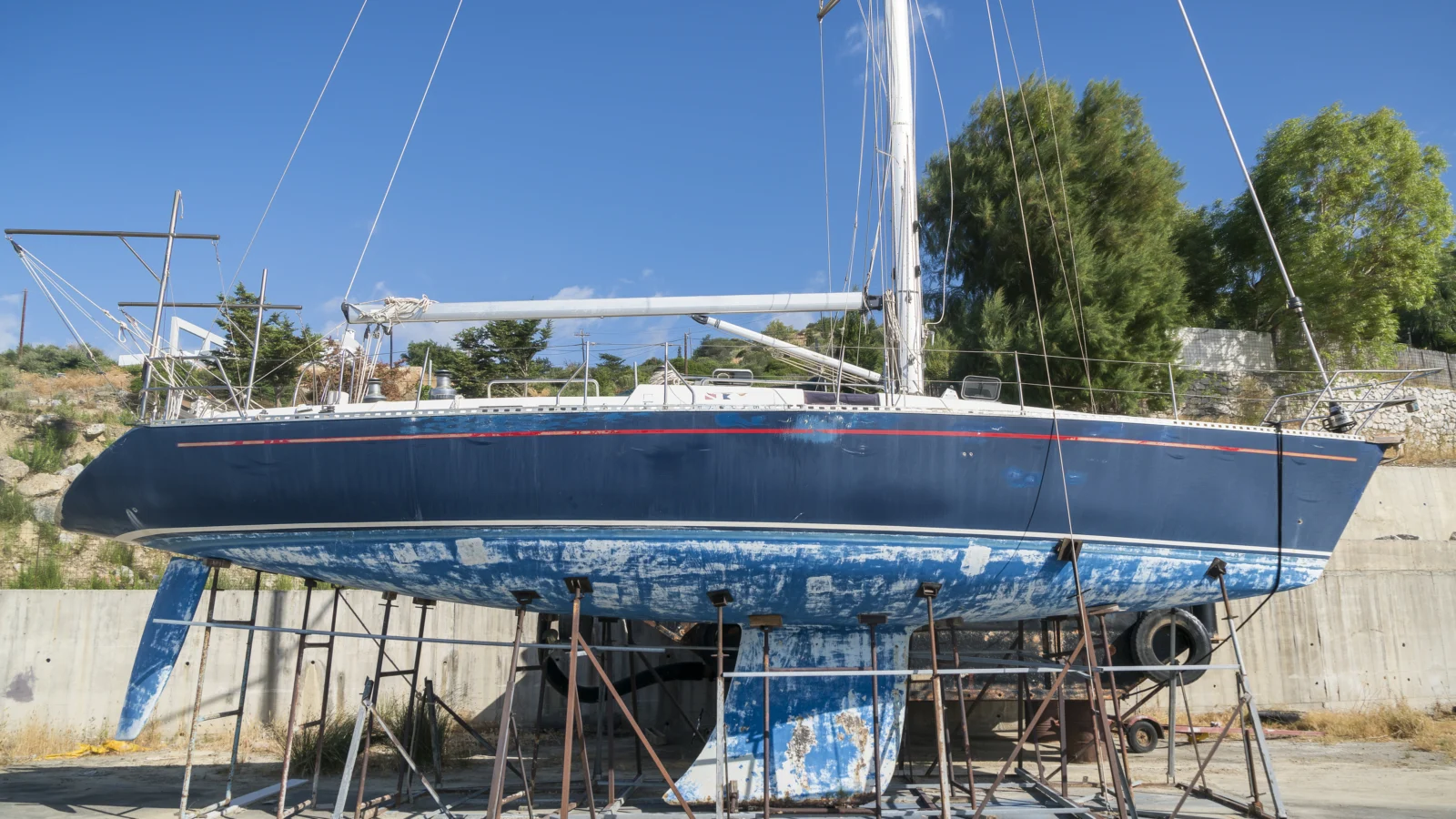
Photographs help show the extent of marine growth, visible chips, cracks and peeling. Useful images include an overall view of the underwater hull from both sides, photographs of the keel and rudder, and close-ups of problem areas.
However, photographs cannot reliably establish adhesion throughout the coating system, measure moisture in the substrate or rule out hidden damage. A remote assessment can help outline the likely scope, but the final decision should be confirmed after inspection ashore.
How is the decision made before repainting?
- Establish the hull material, coating history and previous repairs.
- Assess the surface after haul-out and cleaning.
- Identify the extent of the defects and the layers affected.
- Check the requirements and compatibility of the proposed new coating.
- Carry out a test patch if necessary.
- Agree on preparation, local repairs or complete antifouling removal.
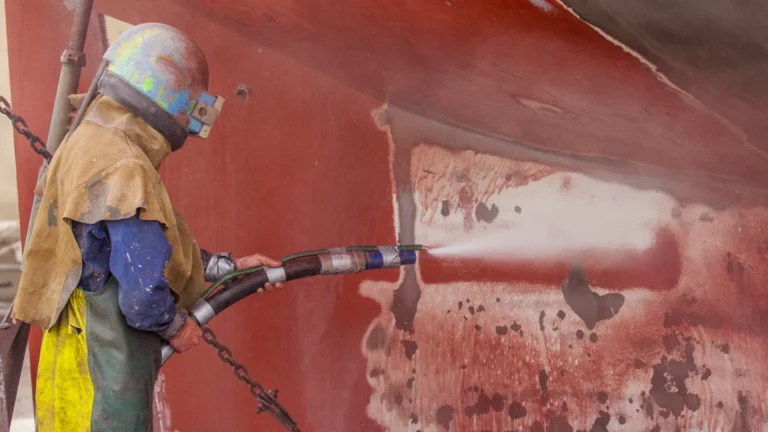
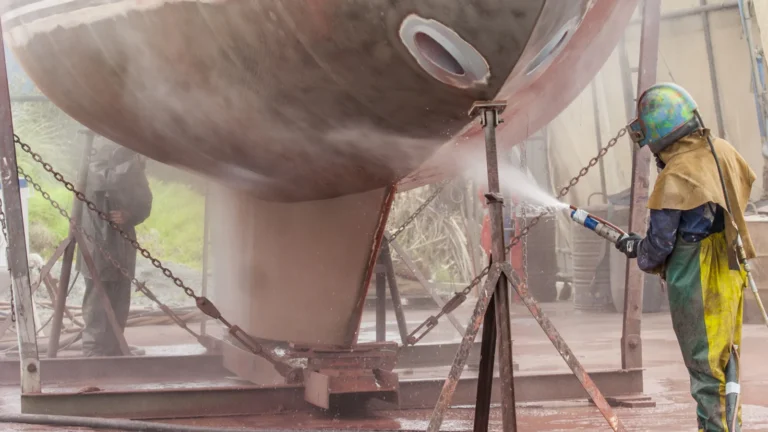
The removal method is selected once the task has been defined. Depending on the hull and coatings, options may include wet abrasion, suitable chemical strippers or professional blasting. Controlling the effect on the gelcoat is particularly important on fibreglass boats.
Old paint residue and contaminated water must be contained and collected. Dry sanding without appropriate protection and dust control should not be treated as a routine, safe preparation method.
Frequently asked questions
Does antifouling need to be completely removed every year?
No. The interval between recoating and the need for complete removal are separate questions. The decision depends on the condition of the coating system and the chosen product’s requirements.
Do barnacles and weed mean all the paint needs to come off?
No. Marine growth calls for cleaning and a review of antifouling performance, but does not by itself prove that all the existing layers have failed.
Can I switch to another antifouling brand?
Sometimes this is possible after the specified preparation or application of an approved tie coat. Compatibility must be checked for the particular products. Using the same brand does not guarantee that any two coatings will be compatible either.
Can peeling areas simply be covered with fresh primer?
Loose layers must be removed. Applying primer over them does not restore their adhesion to the underlying surface.
Can the hull be painted immediately after antifouling removal?
The exposed surface must first be assessed and prepared for the selected system. Any defects may require additional work. Application conditions and launch times are governed by the coating products’ technical documentation.
Hull assessment and planning the work
If you are unsure whether the old antifouling needs to be removed completely, start with an assessment of the coating. Send Hydro Blast & Marine Service the yacht’s model and length, hull material, location and photographs of the underwater hull. Include details of previously used products if known.
This information will help with an initial discussion and arranging an inspection. The required level of removal and subsequent stages should be agreed before work starts.
For the factors that affect your budget, read our first article: “How Much Does Antifouling Removal Cost? What Determines the Price“.
Sources and technical references
Preparation requirements should always be confirmed against the current documentation for the specific coating system. The general guidance in this article has been checked against the following manufacturer resources: