Wet Blasting, Sanding or Chemical Antifouling Removal: Which Method Should You Choose?
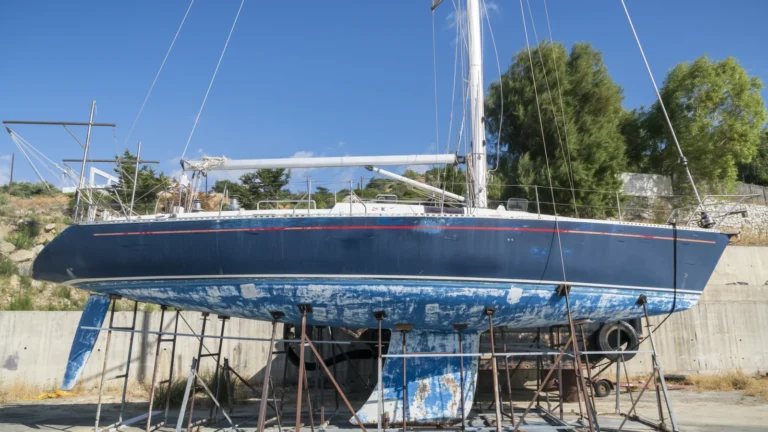
The right antifouling removal method depends on the hull material, the condition of the existing coatings, the area to be treated and the required result. Wet sanding may be suitable for local preparation, a specialist paint stripper can soften compatible old coatings, and professional wet abrasive blasting is an option for larger areas.
No single method is the fastest, cheapest and safest for every yacht. First, establish which layers need to come off and which should remain. Then assess the marina or boatyard conditions, select an appropriate method and agree on the preparation required before repainting.
First, define the job
Owners and contractors may mean different things by “hull cleaning”:
- removing barnacles, weed and contamination;
- preparing sound antifouling for recoating;
- removing isolated areas of peeling paint;
- completely stripping accumulated antifouling;
- removing damaged underlying coatings for hull repairs.
Methods and prices can only be compared meaningfully when they cover the same result. Washing off marine growth, lightly preparing a surface and stripping years of accumulated coatings are different jobs.
If the existing coating is sound and suitable for overcoating, complete removal may not be necessary. Read more in “When Should You Remove Antifouling Completely, and When Is Preparation and Recoating Enough?“.
Wet abrasive blasting
How it works
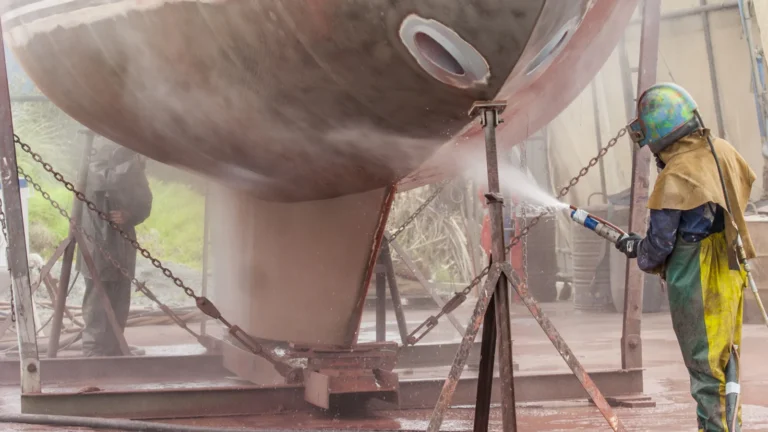
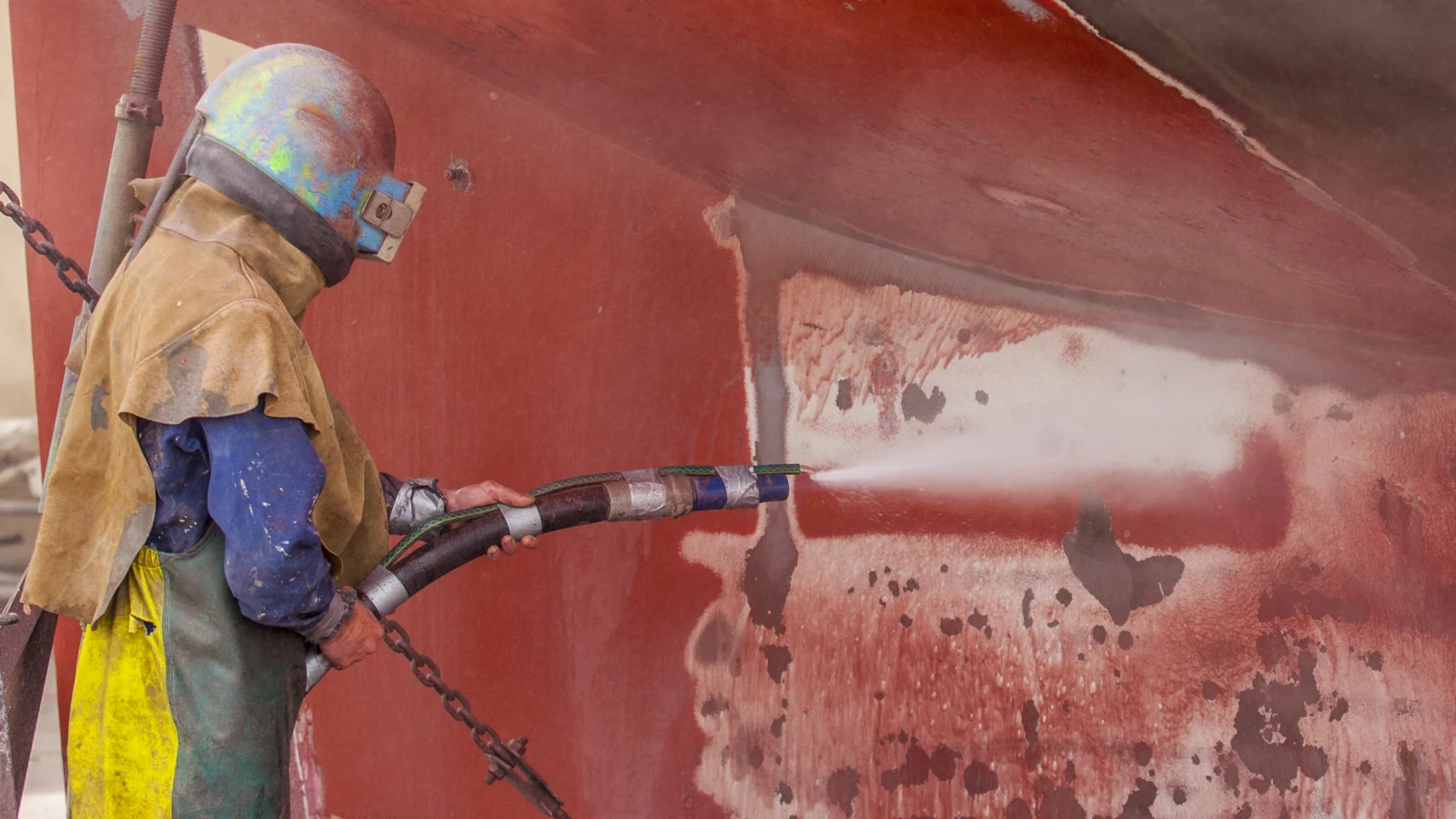
Water and abrasive media are delivered to the surface through a nozzle. Abrasive particles act on the coating to remove it. This differs from washing with water: abrasive media are part of the process, and the equipment and settings are selected for paint removal.
Graco describes wet abrasive blasting as a method for removing antifouling from fibreglass hulls. Adding water helps reduce dust compared with dry abrasive blasting. [1]
When to consider it
If accumulated coatings need to be removed from a substantial part of the hull, it is worth requesting a quote for professional wet blasting. The estimate should include equipment transport, site preparation and clean-up as well as the blasting itself.
What matters for gelcoat protection
Water and low pressure alone do not guarantee that the surface will remain undamaged. The result depends on the media, equipment settings, distance from the hull, exposure time and operator experience. A test patch helps establish how the coating responds and whether the required underlying layers can be retained.
Limitations
A suitable site ashore, equipment access and approval from the marina or boatyard are required. The work area needs protection, and paint residue, spent abrasive and contaminated water must be collected. Reduced dust does not make the waste harmless or remove the need for clean-up.
Wet sanding
How it works
The coating is abraded using water and an abrasive. International specifically describes wet sanding in its antifouling removal guidance. It also highlights the risk of damaging the underlying primer and fibreglass surface if the abrasion is too aggressive. [2]
When to consider it
Wet sanding may be appropriate for limited areas, feathering edges after local repairs or preparing existing coatings where specified by the selected paint system.
International also describes wet sanding in its guidance on repairing coatings on fibreglass and allows layers in good condition to be retained. This illustrates why local preparation should not automatically become a complete strip of the coating system. [3]
Limitations
For a large area with thick coatings, consider the total manual workload, access around hull curves and control of the finish. Ask how the contractor determines when to stop removing material and which areas will require further preparation.
Sanding does not repair hidden defects in the substrate. Contaminated water and slurry must be collected. Dry abrasion of antifouling should not be treated as an equally safe substitute for wet preparation: the manufacturer’s instructions on protection and contamination control must be followed.
Chemical antifouling removal
How it works
A specialist stripper softens the existing coating so that it can be removed. The surface is then cleaned as instructed by the stripper manufacturer. Thick or old coatings may need repeat treatment, as Hempel notes in its guidance on removing old paint. [4]
When to consider it
Chemical stripping can be included in the comparison if a suitable product is available for the hull and the coatings being removed. Before estimating the whole project, test a small area to establish how effectively the paint softens, how many stages are needed and what condition the underlying surface is left in.
Limitations
Not every paint stripper is suitable for fibreglass. International warns that unsuitable products can affect a GRP surface even where a primer is present. [2]
A specialist product should not be replaced with an arbitrary solvent. Compatibility checks, compliance with the instructions and protection of adjacent materials are necessary. The overall time includes application, dwell time, removal of softened coatings, possible repeat treatments and surface cleaning.
Chemical stripping also produces waste: the mixture of old paint and used stripper must be collected. The absence of abrasive dust does not remove the need to protect people and the work area.
A practical comparison for yacht owners
1. If a small area needs preparation
Start by assessing local repair and wet sanding in accordance with the chosen coating’s instructions. A full antifouling strip may be unnecessary for this scope.
2. If a substantial hull area needs stripping
Compare a wet blasting quote with the complete process involved in the alternatives. Ask for an assessment of site preparation, clean-up and subsequent surface preparation, rather than paint removal speed alone.
3. If you are considering a chemical stripper
Confirm the product name, its suitability for the hull material and underlying coatings, the cleaning procedure after use and the outcome of a test patch.
4. If an epoxy barrier coating needs to be retained
Make this part of the brief regardless of the removal method. Whether it can be retained should be confirmed through a condition assessment and test patch. A promise to preserve an unknown layer without inspection is not a substitute for checking it.
5. If blisters or hull damage have been found
Have the defect assessed first. Preparation for fresh antifouling and repair of the substrate are different tasks. The method and extent of removal should take the repair requirements into account.
Which method is cheaper and faster?
Compare the cost of the completed stage, rather than the price of a tool, a tin of stripper or an hour of treatment.
Ask for the estimate to include:
- preparation and protection of the work area;
- equipment transport and consumables;
- removal of the agreed layers;
- treatment of difficult areas;
- waste collection and clean-up;
- cleaning and further preparation before priming;
- necessary yard services and the time ashore.
This will help establish whether mobilising equipment is justified for a small area and how labour-intensive an alternative would be across the whole hull. The conclusion should be based on the particular yacht, rather than a general claim that one method is “always cheaper”.
Paint removal time is also different from the time until relaunch. Inspection, repairs, preparation, coating application and the waiting periods specified for the paint system may all follow stripping.
What to ask your contractor
Before confirming the work, ask seven questions:
- What result does the quote cover: preparation, antifouling removal or removal of underlying coatings as well?
- Why is the proposed method suitable for this particular hull?
- Is a test patch included?
- Which layers should remain, and how will the removal be controlled?
- Is the method permitted at the selected site?
- Who is responsible for protecting neighbouring boats and structures, and collecting the waste?
- What surface condition will be handed over for further preparation and painting?
Written answers help avoid a situation in which the owner expects a surface ready for primer, while the price covers only the main paint removal stage.
Frequently asked questions
Is wet blasting the same as ordinary pressure washing?
No. Wet abrasive blasting uses abrasive media. Water washing may be a separate cleaning stage, but its result cannot automatically be equated with removal of an old coating system.
Can different methods be combined?
Yes, where the job calls for it. Additional local preparation may be needed after the main removal stage, for example. Its scope should be reflected in the quote.
Can every method preserve the gelcoat?
Gelcoat protection depends on the condition of the underlying surface, the materials selected, the operating settings and control of the work. No method offers an unconditional guarantee simply because of its name.
Does all the paint have to be removed back to gelcoat?
No. The extent of removal depends on the coating’s condition and the planned work. Sound underlying layers may be retained if they are suitable for the selected system.
How can I get an initial assessment?
Provide the yacht’s model and length, hull material, location and photographs. Include details of known existing coatings and the result you need. Inspection ashore and a test patch may be required before the method is confirmed.
Choosing a hull cleaning method
Hydro Blast & Marine Service provides mobile antifouling removal using low-pressure wet blasting. Before work begins, it is important to assess the hull’s condition and agree on the required level of removal and site arrangements.
Send your yacht’s model and length, marina location and photographs of the underwater hull. This will help with an initial discussion of the work and the next steps for assessment.
Sources
Preparation and product use must be confirmed against the current documentation for the specific materials. The comparison of scenarios and recommendations for quote contents are practical guidance, rather than a universal work specification.